Posts

Showing posts with the label Financial Conduct Authority

The Financial Conduct Authority comes in for Criticism: What Does PRIIPS Regulation Tell Us about the FCA’s Focus on Consumer Protection?

Image
In today’s post we will be looking at some stinging criticism that was aimed at the Financial Conduct Authority recently, specifically in relation to its regulation of Packaged Retail and Insurance-Based Investment Products, or PRIIPs. In assessing the context behind the criticism, there exists an opportunity to examine the focus of the FCA in relation to its stated mandate of aiming to ‘ make financial markets work well do that consumers get a fair deal ’. A PRIIP is essentially a packaged investment product, and it is a common investment product provided by banks within the E.U. as it offers retail investors an alternative to traditional savings accounts ; however, the determination of what constitutes a PRIIP has been intentionally left broad to allow for a range of products to be traded, but for our purposes it is enough to say that the products are publicly marketed, have exposure to underlying assets like stocks and bonds etc., provide a return over time, and have an eleme...

The Government Enlists Banks in its Immigration-Based Policy Drive

Image
This short post reacts to the news today that banks and building societies are being enlisted by the British Government to check the immigration status of millions of people and take the appropriate action – essentially putting banks on the front-line in the push to reduce the levels of people living in this country without the appropriate leave to do so. The obvious question to be raised by this move is whether the banking system is the appropriate vehicle to meet this objective, and what may be the connotations for it doing so. It was declared in the Autumn ( via the Immigration Act 2016 ) that banks and building societies would be given a list by the anti-fraud organisation Cifas that contained the details of people who are officially liable to be removed or deported from the U.K., or who have absconded from immigration control , with the Home Office stating that the new system would be ‘ fair but firm ’. The design of the new system would be that banks (and building societie...

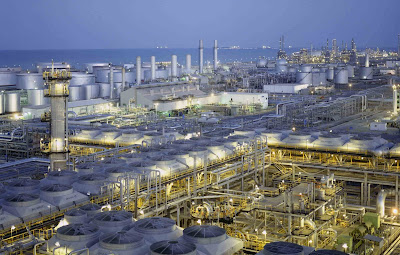
How Independent Can a Financial Regulator Actually Be? Saudi Aramco Reveals the Reality for Financial Authorities

Image
Earlier in the year we looked at the British Government’s attempts to attract the Saudi Energy Giant Saudi Aramco to the U.K. , for the purposes of using the London Stock Exchange (LSE) as the foreign listing organisation for what will be the largest Initial Public Offering (IPO) in history. In the post we discussed how the Financial Conduct Authority, the regulator tasked with regulating the listing mechanisms within the jurisdiction, was actively attempting to reduce the stringent rules surrounding who can use the LSE to enable Saudi Aramco to bring its record-shattering IPO to London. The obvious issue was that the reduction of standards related directly to concerns that have been mentioned almost consistently here in Financial Regulation Matters and across the majority of the literature/commentary, in that the uncertainties that are fundamentally intertwined with Brexit will cause a ‘race to the bottom’, in a number of sectors including the regulatory sector. There have been ...

RBS and its Global Restructuring Group: An Indicator of the FCA's Focus

Image
RBS has been the subject of a number of posts here in Financial Regulation Matters (ten), with posts concentrating on their incredibly poor performance over the last two decades. Posts have looked at aspects such as the increasingly poor financial results being disclosed by the bank and Fred Goodwin’s close-call when he narrowly avoided having his day in court regarding his performance in the run up to the Financial Crisis. However, in today’s post, the focus will be on the so-called ‘Global Restructuring Group’ (GRG) and the sentiment that its problems are causing; we have looked at the issue before with regards to a leaked document that partially detailed the abuse of power demonstrated by the group, but the reaction to that leaked report has been incredibly revealing, and will form the focus of this piece. We heard last time how the GRG, a division within RBS which was tasked with assisting SMEs navigate troubled periods , was in fact doing the opposite and was actively c...

Regulatory Budgets in Perspective: The Bank of England Issues Yet Another Warning over Brexit

Image
In today’s financial news, the Deputy Governor of the Bank of England – Sam Woods – said that the Bank would see its regulatory capability stretched in the wake of the U.K.’s secession from the E.U. to a point that would demonstrate a ‘ material risk to [the Prudential Regulation Authority]’s objectives ’. The basis for Woods’ suggestion is that the potential loss of financial ‘passporting’ in the wake of Brexit would both result in dispersed regulatory entities, and also an influx in companies needing to be regulated due to the removal of the ability to essentially outsource the regulation of an entity to another ‘competent authority’. Whilst this point is worth assessing, and this post will briefly do that, it is also worth taking a broader look at the state of the U.K.’s regulatory framework in terms of its capability . Sam Woods’ comments regarding the ability of the Prudential Regulation Authority (PRA), the regulatory arm of the Bank of England, were extremely direct. Wood...

The “Global Laundromat” Investigation Turns its Focus onto RBS

Image
In March, here in Financial Regulation Matters , we looked at the developing story of a massive investigation into the laundering of Russian funds by a number of famous financial institutions, including HSBC, Lloyds, Barclays and a host of other institutions. The massive scheme, which runs into the tens of billions of dollars, was brought to the public’s attention in March and detailed a scheme enveloping countries from all over the world, with the obvious consequences being financial institutions coming in for regulatory scrutiny and even (potentially) criminal sanctions, especially with regards to the ongoing situation in the U.S. with the Administration’s alleged connection to Russian officials. However, in this post we shall focus on the most recent development which looks at the role RBS played in the laundering system, with the news coming at a very inopportune time in relation to the bank’s reporting of a £939 million profit for the first 6 months of 2017. The week beg...

British Regulators Attempt to Attract Aramco to London: The Effects of Brexit

Image
Today’s post looks at the news that the Financial Conduct Authority, the British regulator in charge of protecting the interests of the investing public (amongst other mandates), is considering reducing the standard required to list on the London Stock Exchange in order to attract the proposed public offering of 5% of Saudi Aramco’s shares – which will be the largest ever flotation. In just the second ever post here in Financial Regulation Matters , we discussed the potential of Britain succumbing to unscrupulous forces in the wake of Brexit, primarily due to desperation. More recently, we discussed how crucial corporate governance reforms have fallen by the wayside because of the decision to leave, and today’s news concerning Aramco is, unfortunately, a manifestation of the two posts – there is a real fear that the need to look attractive to big business is fundamentally setting the ‘smaller’ components of British society back considerably; this time, minority investors are in th...

The Automobile Finance Bubble: A Relatively Small Problem That Keeps Getting Bigger

Image
Today’s post looks at the recent news that the value of finance deals for the purchasing of cars in the U.K. set a new monthly record in March, concluding at an increased rate of 13% over March 2016, totalling over £3.6 billion in March 2017 alone. We have discussed the issue of the automobile (car) finance bubble growing before here in Financial Regulation Matters , but the nature of the consistent growth means it is worth assessing the situation again because, ultimately, what looked like a relatively small ‘bubble’ is increasingly appearing to resemble much larger bubbles that have burst before, with catastrophic effects. Whilst the bursting of the car finance bubble may not grind the economy to a screeching halt, it will have a detrimental effect upon a global economy that is still recovering from the onslaught of 2007/08. So, in light of this, this post will assess some of the important aspects that are continuing to be prevalent, whilst also assessing the potential for the ...

The Ever-Increasing Issue of Student Finances: The Need for a Financial Regulator to Intervene

Image
Today’s post looks at the news that the costs of student accommodation have increased to the point that now more than half of all students in the U.K. pay more than £100 per week for their accommodation , a rise of just under 20% in three years. We have looked at the issue of spiralling costs in this sector before in Financial Regulation Matters , where the call was for regulatory vigilance. However, this news, when paired with the ever-increasing rate of student suicides, the increasing deterioration of students’ mental health, protest after protest against spiralling costs, and fears over the continuing commercialisation of the Higher Education sector, leads one to believe that the time for ‘vigilance’ has passed – what is required now is action. In this post the ever-deteriorating situation will be analysed, and rather than a State, via the Financial Reporting Council, looking to intervene and reduce the pressures upon record numbers of students, the reality of the situation is ...

The Financial Exclusion Committee: A Necessary Endeavour in a New World

Image
This post is concerned with the recent publication from the ‘Financial Exclusion Committee’, a committee that was set up by the House of Lords to ‘ consider financial exclusion and access to mainstream services ’. The report has created headlines that allude to the poorest in Britain being excluding from banking services, and ultimately being turned towards ‘ high-cost credit ’ and ‘ rent-to-own ’ products, However, there are a number of aspects, some of which are particularly vital for society, which emanate from this report and are worth considering. Ultimately, the report suggests a number of reforms and, although advisory in nature, strikes the right tone in terms of what is required to protect the vulnerable in society as we rocket towards a new phase. The report tackles a number of issues in terms of what is being labelled ‘financial exclusion’. The first aspects that we will look at revolve around the role of the banks within society. The first recommendation that may hav...

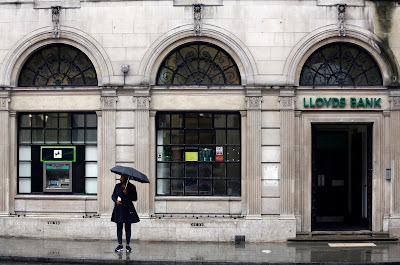
Lloyds Bank and the PPI Scandal: The Premature ‘Out of the Woods’ Rhetoric

Image
Today’s very short post focuses upon the news that the Financial Conduct Authority (FCA) has recently extended the deadline to claim compensation for mis-sold ‘Payment Protection Insurance’ (PPI). Whilst a lot of financial institutions will have to prepare to offset the extended deadline, it is Lloyds that has grabbed the business headlines by apportioning an extra £350 million to offset any further claims that may be made of it – however, this comes only a week or two after the Bank posted its best performance figures in over a decade, as was previously discussed in Financial Regulation Matters . This post will therefore argue that the rhetoric being advanced recently regarding Lloyds – rhetoric like Lloyds represents ‘ a modern day success story ’ is wide of the mark and creates a false sense of security that we simply cannot afford to believe in. The ‘ robust recovery ’ was heralded far and wide upon the publication of Lloyds Bank’s financial performance for the previous fi...