Posts

Showing posts with the label Banking

Is the ECB now the Dominant Player in the European Rating Arena? Perspective may be needed…

Image
In today’s very short post, an article in Global Capital is reviewed in relation to a recent post here in Financial Regulation Matters concerning the European Central Bank’s decision to accept now-junk status bonds as collateral. The article, published in yesterday’s edition of Global Capital , is entitled ‘ The ECB is now Europe’s foremost rating agency ’, and is based on the premise that the ECB’s decision has fundamentally altered the credit rating market in Europe. This is because ‘if the ECB thinks it’s good enough to buy or hold as collateral, then it probably is’. Furthermore, the article argues that ‘a credit opinion from the ECB is invariably going to be more accurate and more timely, given that the opinion will itself have a direct bearing on credit quality’. Finally, the article cites S&P’s decision not to downgrade Italy as evidence of this power shift towards the ECB and away from the rating agencies. However, if we return to last Thursday’s post, then we...

ABN Amro the Latest Bank to Show the Need for a New Solution to Money Laundering

Image
It has been reported today that ABN Amro, the Dutch bank that is half-owned by the Dutch Government, is being investigated by the country’s public prosecutor. Though it has not revealed what that investigation entails, it has warned that ‘ it could face fine for lapses in its client due diligence that may have allowed breaches of money laundering and terrorism financing laws ’. In today’s post, we will look at the potential for this investigation, and assess this against the backdrop of what seems to be an increased commitment to compliance on behalf of ABN Amro, paradoxically. In light of a recent article I developed looking at Sigma Ratings , it is worthwhile considering their mission again in light of yet another massive breach of AML regulations, potentially. Though the bank has been unable to declare what the investigation concerns, its suggestion that it may be regarding breaches in AML compliance have resulted in a 9.3% drop in the shares already. The article in the FT di...

Article Preview – ‘Sigma Ratings: Adapting the Credit Rating Agency Model for the Anti-Money Laundering World’

Image
In today’s post we will preview an article by this author that is due to be published soon in the Journal of Money Laundering Control . The article is available in its pre-published format here . In this post we will review the underlying premise of the article, and present the target of the article which is a new venture in the anti-money laundering arena – Sigma Ratings . The article aims to introduce the new venture to the literature and examine its potential against the backdrop of the anti-money laundering (AML) arena, and also against the experiences of its model-sharing cousins, the credit rating agencies. For clarity, Sigma Ratings is essentially a mixture of the two worlds and seeks to bring the credit rating model into the AML arena, with the hope being that the agency will enable the world to ‘ transact with confidence ’. To achieve this aim, the article presents a number of different contexts. The first context presented is that of the AML world and some of the compe...

Ross McEwan in Focus: Former RBS CEO Heads to Australia

Image
RBS has taken up a large amount of space here in Financial Regulation Matters since the blog began, and also column inch after column inch in the business media. Financial Crisis-era transgressions, headline-catching financial penalties (whether large enough or not), a return to profitability, sell-offs that represent losses for the taxpayer, and also running businesses into the wall are all aspects that plague the recent and current era of the massive bank. However, now that Ross McEwan has made his move back to Australia after resigning in April , it is worth taking a closer look at the man that led the bank through one of the most difficult periods in its nearly 300-year history. The post-Crisis era for RBS has been, and arguably continues to be turbulent (despite returning to profitability). Going through those post-Crisis era developments is worthwhile, but we shall do that through the prism of understanding Ross McEwan more. Born in 1957 in New Zealand and educated at Has...

Barclays Makes its Move into Familiar Places

Image
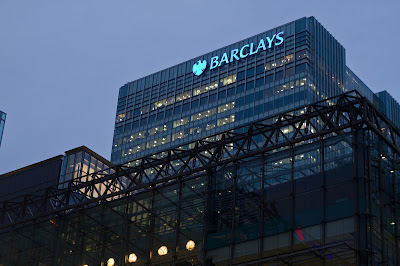
We discussed recently here in Financial Regulation Matters that Edward Bramson, the activist investor attempting to change the direction within the British bank Barclays, was attempting to have his fellow shareholders approve his ascension to the Board of the Bank on account of wanting to stem the continued development of the investment arm of the bank. In this post, we will look at what happened and assess the latest news which shines a light on his reasoning. As was widely expected, Bramson lost his bid to join the Board . Only 13% of the votes cast were for Bramson’s resolution although, as stated above, this was widely expected. Whilst there was an unexpected development in the AGM – 30% of shareholders voted against its remuneration report – the focus on Bramson is important. The Guardian reports how opinion was split concerning Bramson’s motives, with some investors agreeing that there was a need to ‘ wake this board of directors up ’, but others stating that ‘bear in m...

European Auditing Regulations Begin to Take Effect

Image
In 2016, a number of new rules regarding the auditing of large financial institutions within Europe were established. The regulations had a number of aims and we will discuss them in today’s post, but one of the major aims was to ensure further transparency when it came to the auditing of PIEs, or ‘Public-Interest Entities’. Interestingly, this designation allows the EU to capture financial institutions that hail from outside of the EU, and in today’s news the first test of those regulations was passed when Goldman Sachs announced that its new auditor from 2021, in complying with the rotational elements of the regulation, would be Mazars, marking the Bank’s first move outside the so-called ‘Big Four’ auditors in its history. The regulations that came into force in 2016 have a number of aims including: ensuring further transparency; providing statutory auditors with a strong mandate to be independent; develop a more dynamic audit market; and to improve the supervision of auditor...

Edward Bramson Shines a Spotlight on the Concept of the Free Market

Image
We have examined the potential reconfiguration at Barclays before in Financial Regulation Matters , and in today’s post we will pick up on some comments made in today’s business media ahead of Barclays’ AGM on Thursday. The focus and speculation surrounds that of Edward Bramson, a so-called activist investor who many believe is aiming to cause substantial change within the massive bank. In this post we will look at Bramson more closely, and then discuss a concept that is being advanced as a ‘norm’ but which calls into question the very nature of the marketplace. Edward Bramson has held many positions as one might expect of a serious investor, but it is through his investment vehicle Sherborne and Company that he is making headlines at the moment. Through that vehicle he has amassed a 5.5% stake in the bank and it is being reported across the business media that, tomorrow (Thursday), he will ask shareholders to elect him to the Board of the bank. His stated reason for this is ...

Scandinavian Banks’ New Era of Scandal

Image
On the back of revelations regarding Danske Bank and its connection to money laundering last year, it was revealed in the news yesterday that Birgitte Bonnesen, the CEO of Swedbank, had been relieved of her duties just minutes into the Bank’s AGM in relation to the organisation’s connection to dirty money. In this post we shall examine these connected cases further and learn more about the anti-money laundering issues facing banking organisations. The incredibly reputable Danske Bank, Denmark’s largest lender, became embroiled in a money laundering scandal last year when it was revealed they had helped launder almost €200 billion in Russian and Baltic money since 2007 . The case of Danske Bank revolves around the purchasing of an Estonian Bank that would become the vessel for money laundering from neighbouring States like Russia and the Baltic States. The leadership of Danske Bank were not only made aware of the issues as early as 2010, but actively promoted the increasing of ‘n...

Technology Companies and Competition: Are There Lessons to be Learned from Banking?

Image
In this post, we will examine the calls made today by a US Senator in relation to the leading technology companies. We covered the issue of oligopolies and market dominance in a recent post , and the issues are the same within the technology sector. However, a legislative approach that was taken in the 1930s is being cited as a good approach to take now, which is line with the common mantra in the modern day where everything was better and more effectual ‘in the past’. In this post we will take a step back to examine whether that past approach really was effectual, and discuss whether it really is applicable to the modern marketplace. David Cicilline, a Democratic Head of the House antitrust subcommittee in the US, said today that imposing a system akin to the Glass-Steagall Act upon the technology industry would potentially serve to restrain the size of the largest technology companies and bring them in line with a more consumer-based purpose. Speaking to the Financial Times ,...

The Conflation of Business and Politics: An Update on the RBS Global Restructuring Group

Image
Unsurprisingly, RBS and its now-infamous ‘Global Restructuring Group’ (GRG) have been covered a number of times here in Financial Regulation Matters (most notably here , here , and here ). We have also analysed the relationship between the regulators, namely the FCA, and the bank itself on account of the massive bail-out the bank received from British taxpayers at the height of the financial crisis. We have called into question the ability, or capacity of regulators to efficiently regulate and punish the bank owing to this ‘special relationship’ and, in today’s post, we will look at the latest twist in the tale that ‘ MPs have referred to as the worst scandal since the financial crash ’. In the previous posts linked above we discussed and analysed how RBS, via its GRG group, failed thousands and thousands of SMEs ( the BBC cite 16,000 ) with a large number of those companies ending up ruined by decisions taken by the GRG unit – the business media state today that ‘ many of the...

2018: A Regulatory Year in Review

Image
As 2019 begins and we look back on 2018, it has been, as always, a busy year for the world of business and the regulators tasked with controlling it. In this review post, we will look back over the year by sector, and discuss some of the flashpoints to analyse whether there are any themes that can help us foresee what 2019 has in store. Before that, I would like to thank everybody for their continued support of the blog, and also all of those kind contributors who have provided guest posts throughout the year. Also, in a bit of shameless promotion, my first two books are now available for purchase and I would like to thank everybody at Routledge for bringing Regulation and the Credit Rating Agencies: Restraining Ancillary Services to life, as well as everybody at Palgrave Macmillan for bringing The Role of Credit Rating Agencies in Responsible Finance to life. A Year of Failure There were a number of high-profile failures this year, and many were socially impactful. In 201...