Posts

Showing posts with the label Fraud

Does the Serious Fraud Office need to be supervised more?

Image
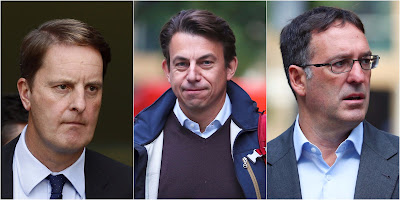
The case that the Serious Fraud Office (SFO) brought against a number of Barclays bankers for the deal reached with Qatar at the height of the Crisis has been reviewed before here in Financial Regulation Matters and across the financial press. However, now that case has concluded with the three bankers who were prosecuted being acquitted by the courts, one of those bankers – Richard Boath – has decided to speak out about his experience and is arguing that the SFO should have its powers seriously reviewed. In this post we will look at these arguments and look at some of the consequences of taking action in this regard, and of continuing the course. The high-profile fraud case dominated the financial press once the SFO brought charges against the three bankers – Richard Boath, Roger Jenkins, and Tom Kalaris. The five-month trial concluded with the jury returning after five hours to find all the defendants not guilty on all counts . The SFO had begun to experience criticism from...

PricewaterhouseCoopers: A US Court Takes A Stand

Image
Today’s post reacts to the news that PricewaterhouseCoopers (PwC) has been fined a record amount by a US Court in Alabama over its role in the collapse of Colonial Bank. The reaction to the news, and what it may mean for other regulators (who are currently in the limelight for their soft-touch approach) will be discussed in this post, with the sentiment being that this action is just a step in the right direction, but nothing more (for a number of reasons). Colonial Bank collapsed in 2009 , after buying over $1 billion’s worth of fraudulent mortgages from Taylor, Bean & Whitaker, the former Mortgage-originator which also collapsed in 2009 and saw a number of its executives jailed for fraud . The collapse of Colonial, which is one of the largest in the state of Alabama , has been the subject of a number of trials and investigations, with the most recent concerning the performance of auditors who were tasked with assessing the workings of the bank. Yet, in the overarching sto...

Financial Whistle-Blowing Under Siege: Lloyds and the Latest Attack

Image
This first of three brief posts today looks at a subject we have covered here in Financial Regulation Matters a number of times, and that is the concept of a financial whistle-blower. The story we have covered most is the story of Jes Staley, the CEO of Barclays ( here and here ), but although that case resulted in a (relatively) small fine, news recently suggests that the protections afforded to financial whistle-blowers need to be strengthened much more, both in light of the recent actions of leading members of the financial services but also because of the period that we are in – making sure transgressions in the financial sector are identified and expressed (either publically or to regulators) is crucial as we move away from the last financial crisis. There are a number of issues affecting Lloyds at the moment, but most stem from their takeover of HBoS and the fraud that was uncovered within a division in Reading. We have covered this story a number of times ( here ), but ...

Consequences Begin to Build for Wells Fargo

Image
In this brief post, the focus will be on updating the stories we have covered in the past here in Financial Regulation Matters regarding Wells Fargo and their performance over the past decade or so. The last time we covered the scandal that has blighted Wells Fargo’s progression was in May of last year, and since then there have been a number of developments. However, very recently, the bank has received a number of fines which demonstrate the failures that have left the bank struggling to regain the trust it needs to move forward. We last looked at Wells Fargo this time last year, and in that post we looked at the actions of a bank who fraudulently created between 2 and 3.5 million fake bank accounts for the purposes of selling services to customers who often were not aware of the actions taken on their behalf. We covered the details of the fraud in those previous posts, so today it is worth looking at the legal reaction to that fraud. We begin at the end of last month when t...

Updates from the Banking Sector

Image
Owing to the dynamics of the academic year, there has been somewhat of a lull recently here in Financial Regulation Matters , so to get up to speed a round-up of developments within the banking sector seems like a good place to start. There have been a number of developments since the last post, so today we will work our way through them as efficiently as possible; the underlying sentiment is that the developments portray a sector that is consistently changing since the Crisis, with a number of aspects of that said Crisis continuing to play out (rather unsurprisingly). We start with our old friends RBS, who have taken up a large amount of space in Financial Regulation Matters , mostly on account of their remarkable development since the Crisis. Past posts have focused on the unique relationship that continues between the bank and the government (on account of its ownership of the bank), its terrible performance (alongside the FCA) in relation to its treatment of SMEs , and also...

Barclays Charged for Crisis Dealings: A Crisis That is Going Nowhere

Image
In the second post today, we will take a brief look at the latest development from a regulator (loosely termed) that we have looked at many occasions – the Serious Fraud Office (SFO). In responding to actions taken in the midst of the Crisis, news today confirms that the Office has charged Barclays for loans the bank made to Qatar at the same time investors from the Country provided the necessary lifeline which allowed the bank to survive the Crisis without governmental support. The impact of the prospective action could be far-reaching, so in this post the details of the allegations will be examined, as will the potential fallout. During the Crisis, the British-based bank tapped investors for nearly £21 billion, with almost £4.5 billion coming from Qatar Holding – part of the State’s Sovereign Wealth Fund – and Challenger Universal, the investment vehicle of the former Qatari Prime Minister . Furthermore, the bank acquired more than £7 billion more from the two vehicles, along ...

The Protracted Tesco Fraud Case Abandoned: Will the Serious Fraud Office Continue?

Image
Today’s brief post looks at the fraud case concerning three Tesco Executives that has been rumbling on for months at great expense. Today, there was a major development which raises the question as to whether the Serious Fraud Office (SFO) will continue its action against the three Executives, bearing in mind the many different factors that must now be taken into consideration; in this post, those factors will be laid before we assess whether it is (a) worth the SFO continuing its action and (b) what the effects of that decision, either way, may be. We have looked at this case before , albeit briefly, in Financial Regulation Matters when we looked at the decision of the Financial Reporting Council to discontinue investigations into PricewaterhouseCoopers (PwC) in the wake of the massive accounting scandal that saw the SFO fine Tesco £129 million for the accounting transgression. The current case is concerned with three individuals in particular – Carl Rogberg, John Scouler, a...

HS2 in the Limelight

Image
The final post today looks at the company behind the massive HS2 infrastructure project that will see some of the U.K.’s largest cities connected by a new high-speed railway system. We have looked fleetingly at the project before when we focused on the travails of Carillion, just one of the firms tasked with seeing this large-scale project realised. However, whilst Carillion is experiencing a period of difficulty at the moment, the HS2 Company itself has this week been thrust into the limelight because of its organisational structure, and its compensation to key individuals. So, in this post, we will look at the developing story and assess the development of this integral project. High Speed Two, or HS2, is the name given to the large-scale infrastructure project that aims to connect Britain’s largest Cities by way of modern high-speed rail links and is coordinated by the HS2 Ltd Company that is funded by grant-in-aid from the Government. The project will see eight different c...

News from the Regulators: Blink and You Will Miss It

Image
Today’s post acts as a small review of two specific news pieces that broke today concerning two financial regulators in the U.K. Whilst one would have had to have been quick to spot these stories, with both falling down the list of financial news stories rather quickly, each has particularly strong knock-on effects, but for differing reasons. So, in this post, a little more detail will be added as both of those stories represent the latest iterations of themes that have formed the basis of a number of posts here in Financial Regulation Matters . The first story is concerned with the infamous report conducted by the FCA regarding the actions of RBS and its ‘Global Restructuring Group’ (GRG). We have covered this issue on a number of occasions, and heard most recently that whilst the FCA has been busy investigating and punishing a number of firms of their failures, firms like BrightHouse and Equifax, their hesitancy to take any serious action against RBS has garnered plenty of jus...

French Regulators Hit HSBC for €300 million for Tax Evasion, With More to Follow

Image
Today’s short post serves to review the recent movements of French regulators aiming to crack down on large-scale tax evasion taking place in and through its jurisdiction. Le Parquet National Financier (PNF) are France’s largest financial regulator in terms of financial-based crime, so equivalent really to the Serious Fraud Office in the U.K., and we looked at their work recently here in Financial Regulation Matters with regards to their investigation of Airbus and its potential involvement in widespread bribery. Today, however, we will review their recent work with regards to tax evasion, which is particularly pertinent given the recent ‘ Paradise Papers ’ scandal which will be the focus of tomorrow’s post. For HSBC, one of the world’s largest and most widespread banks, this specific problem today stems from the group’s Swiss Private bank arm, and relates specifically to claims that it helped wealthy clients evade taxes – it was claimed that more than €1.6 billion’s worth of ...

Airbus Prepares for “Turbulent and Confusing Times”

Image
Today’s post looks at what, potentially, could be the next large-scale case of corruption, and that is the amalgamation of allegations of corruption perpetrated by the European-based Aero Corporation Airbus. Whilst we have looked at the Aero industry closely recently, particularly with regards to the trade-dispute between Bombardier and Boeing, this post can perhaps be regarded as the next instalment of our analyses into the work that the Serious Fraud Office (SFO) is conducting, because it is extremely likely that the SFO will be taking action against Airbus at some point. A previous post regarding the SFO looked at its reprimanding of Rolls-Royce , and there are many similarities between the actions taken in that case, and the actions that may be taken in this particular case; yet, the political elements that are included in this case mean that the outcome may be much different to what is currently being projected. Firstly, it is worth reviewing Airbus’ current situation, bec...

RBS and its Global Restructuring Group: An Indicator of the FCA's Focus

Image
RBS has been the subject of a number of posts here in Financial Regulation Matters (ten), with posts concentrating on their incredibly poor performance over the last two decades. Posts have looked at aspects such as the increasingly poor financial results being disclosed by the bank and Fred Goodwin’s close-call when he narrowly avoided having his day in court regarding his performance in the run up to the Financial Crisis. However, in today’s post, the focus will be on the so-called ‘Global Restructuring Group’ (GRG) and the sentiment that its problems are causing; we have looked at the issue before with regards to a leaked document that partially detailed the abuse of power demonstrated by the group, but the reaction to that leaked report has been incredibly revealing, and will form the focus of this piece. We heard last time how the GRG, a division within RBS which was tasked with assisting SMEs navigate troubled periods , was in fact doing the opposite and was actively c...

RBS – The Latest Demonstration of a Poisonous Bank

Image
On many occasions here in Financial Regulation Matters we have looked at two seemingly separate issues. We have covered, extensively, the developing story of the fraud at HBOS from the initial trial and conviction of a number of fraudsters, to the continued and difficult fight against Lloyds for compensation. At the same time, there have been a number of posts concerning RBS and their abysmal performance, ranging from their continued failings since being nationalised to their settlements with wronged investors and shareholders. However, there are now reports suggesting that these two streams can be neatly brought together, which unfortunate for the inevitable victims of such an amalgamation. This author has written extensively on the concept of oligopolistic dynamics within the credit rating industry and, regrettably, the same dynamics can be seen in the banking industry. The performance of the Reading Unit of HBOS in defrauding vulnerable SMEs was simply just the tip of the i...