Posts

Showing posts with the label Financial Exclusion Committee

Payday Loans Complaints Increase by 227%: A Social Time Bomb

Image
Today’s post looks at the recent news that, according to the Financial Ombudsmen Service in the U.K., complaints over the last year regarding so-called ‘payday loan’ companies have increased by an incredible 227% , whilst complaints relating to consumer credit more broadly have increased by almost 90% to around 26,000. We have looked at this issue before here in Financial Regulation Matters on a number of occasions – most notably with regard to the Financial Exclusion Committee – so today we will assess these increases and the supposed rationale for them. However, as is usually the case when we look closer at any issue, there is a growing underlying issue which is intensifying at every turn. The figures released by the Financial Ombudsman Service relate to most sources of credit, with the majority of complaints still being concerned with Payment Protection Insurance. Whilst some areas for complaint in relation to credit went down – complaints about banks for example – the gene...
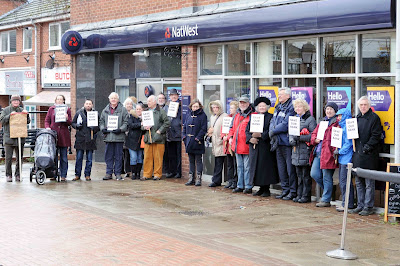
The Issue of Bank Branch Closures: Should the Continuation of Bank Branches Be Enforced?

Image
Today’s post is concerned with the issue of banks closing their physical branches up and down the U.K., which has recently led the Shadow Chancellor John McDonnell and other politicians to call for an end to what is being described as an ‘epidemic’ of bank branch closures – McDonnell has pledged that Labour will tackle the issue by only permitting branches to be closed only after extensive consultation and the gaining of permission from the Financial Conduct Authority , should they win the next General Election. However, this post will examine the issue from the obvious point of the need to keep branches open, but also from the point of view of whether it is right, or indeed appropriate to force private companies to operate in a manner which benefits the public but not their own profit margins. Firstly, it is important to note the current state of bank branch closures in the U.K., because the rate is rapidly increasing. According to a House of Commons briefing paper, there wer...

Karen Millen Declared Bankrupt: The Importance of Financial Education

Image
Today’s post aims to use the story that broke recently, that designer Karen Millen has been declared bankrupt after failing to pay a £6 million tax bill , to show that the recent calls by the Financial Exclusion Committee – to promote financial education earlier, and much more strenuously, as discussed in Financial Regulation Matters recently - is of paramount importance. Karen Millen, who as we shall discuss came from the bottom of society to become a household name and would go on to be recognised for her services to fashion, is now, arguably, bankrupt because of the iniquities that exist within the financial arena – in this post, the aim will be to discuss this, and show how an extensive coverage of this concerted effort to educate children on financial matters would, potentially, see an end to instances where those who have talent are being destroyed by those who understand the parameters of a system that naïve participants do not even recognise they are subjected to. Kare...

The Financial Exclusion Committee: A Necessary Endeavour in a New World

Image
This post is concerned with the recent publication from the ‘Financial Exclusion Committee’, a committee that was set up by the House of Lords to ‘ consider financial exclusion and access to mainstream services ’. The report has created headlines that allude to the poorest in Britain being excluding from banking services, and ultimately being turned towards ‘ high-cost credit ’ and ‘ rent-to-own ’ products, However, there are a number of aspects, some of which are particularly vital for society, which emanate from this report and are worth considering. Ultimately, the report suggests a number of reforms and, although advisory in nature, strikes the right tone in terms of what is required to protect the vulnerable in society as we rocket towards a new phase. The report tackles a number of issues in terms of what is being labelled ‘financial exclusion’. The first aspects that we will look at revolve around the role of the banks within society. The first recommendation that may hav...