Posts

Showing posts with the label Investing

Credit Rating Agencies Turn their attention towards Racial Equality and the “S” in ESG

Image
Regular followers of Financial Regulation Matters , and those interested in the development of the credit rating industry, know that there has been a concerted and purposeful effort from the rating agencies to integrate the concept of ESG (Environmental, Social, and Governance) into their credit risk assessments. This began with some takeovers of ESG-date providers, and was solidified, in theory, with the major rating agencies’ connection to the UN-supported Principles for Responsible Investment initiative (PRI). However, since then there have been a number of claims raised against the rating agencies, most noticeably concerning how the rating agencies transmit how they are considering ESG-related factors, and to what extent. Research has shown that, majoritively speaking, the agencies consider the “G” element to be the most ‘material’ aspect usually, with little being confirmed regarding the ‘materiality’ of the “E” and the “S”. Yet, with the recent events across the western world be...


Is the ECB now the Dominant Player in the European Rating Arena? Perspective may be needed…

Image
In today’s very short post, an article in Global Capital is reviewed in relation to a recent post here in Financial Regulation Matters concerning the European Central Bank’s decision to accept now-junk status bonds as collateral. The article, published in yesterday’s edition of Global Capital , is entitled ‘ The ECB is now Europe’s foremost rating agency ’, and is based on the premise that the ECB’s decision has fundamentally altered the credit rating market in Europe. This is because ‘if the ECB thinks it’s good enough to buy or hold as collateral, then it probably is’. Furthermore, the article argues that ‘a credit opinion from the ECB is invariably going to be more accurate and more timely, given that the opinion will itself have a direct bearing on credit quality’. Finally, the article cites S&P’s decision not to downgrade Italy as evidence of this power shift towards the ECB and away from the rating agencies. However, if we return to last Thursday’s post, then we...

The Run on Neil Woodford and the Position of the ‘Retail’ Investor

Image
The business press has been awash with articles concerning the fallen investment star Neil Woodford, who suspended withdrawals from his Equity Income Fund on Monday. As part of these reports, a number of issues have been raised ranging from the protection afforded by the regulator – The Financial Conduct Authority – to the role of so-called investment ‘ supermarkets ’ like Hargreaves Lansdown. In this post we will look at these issues but focus mainly on the conceptual role, or identity, of the so-called ‘retail investor’. Neil Woodford, best known for his time at Invesco Perpetual, started the Equity Income Fund five years ago and, even upon its launch, was placed in Hargreaves Lansdown’s ‘Wealth 50’ list. Hargreaves Lansdown, which ‘ issues recommendations about which managers to back to an army of retail investors ’ has since suffered the consequence for maintaining Woodford’s place on that list, even up until the fund had been suspended, as its shares dropped 4% on news of i...

The Ever-growing Importance of ESG: BlackRock and Audi

Image
In today’s post, we shall examine a concept that we have examined a number of times before here in Financial Regulation Matters , and that is the concept of ESG, or more accurately the integration of ‘E’nvironmental, ‘S’ocial, and ‘G’overnace concerns in relation to business. Today’s post focuses on two stories in particular, and uses them as a vehicle for examining some merging debates around this ever-growing sector. We looked over the summer at the story that Nissan had admitted to falsifying some of its emissions-related data , which naturally should lead us to think of the sector-defining Volkswagen scandal , a scandal which will leave a massive mark on one of the industry’s powerhouses. In line with those developments, Audi was fined €800 million last Tuesday for similar transgressions, ranging from 2004 to 2018 . There are, of course, a number of issues and variables that are affecting the auto industry at the moment, but for our discussion surrounding the concept of ESG,...

House of Fraser Continues to Teeter

Image
House of Fraser, the massive department store that began in 1849, in Glasgow, has been making the business headlines for quite some time. After the collapse of BHS, House of Fraser stands on the brink of being the next massive feature of the British High Street to fold. In this post, we will look at the latest developments as the company battles to stay in existence and survive the hostile environment facing High Street retailers, whilst we will also look at the what these developments many mean for the future of British retailers as we continue to move through the economic cycles. The news of House of Fraser’s troubles broke earlier in the summer , which came on the back of negative financial results last year which detailed that the company had made a net loss of £37 million, with a £53 million drop in revenue . Those financial troubles led to the need to develop a rescue plan to protect the company from the hostile environment within which they operate, and in June of this ye...

More Warning Signs for the Auto Industry

Image
In Financial Regulation Matters , we have looked at a number of issues within the automobile (hereafter ‘auto’) industry, ranging from the positive – the ever-growing expansion of the electric auto market – to the negative – concerns over the finance bubble which is continuing to grow within the sector . Today’s post looks at the latter issue, with news recently suggesting that the inevitable conclusion to the growing ‘bubble’ is drawing ever nearer. In a post in May of last year, we discussed how the fears regarding a growing credit bubble in the auto industry were beginning to get louder and louder, with the Financial Conduct Authority and the Bank of England raising specific concerns over an increased rate of indebtedness within the sector . Now, in the United States, those same concerns have manifested in the first stages of a process we are all living the result of today. Only a few days ago Bloomberg reported that a ‘ growing number of small subprime auto lenders are clos...

Update – Tesco’s takeover of Booker Not Yet a Done Deal

Image
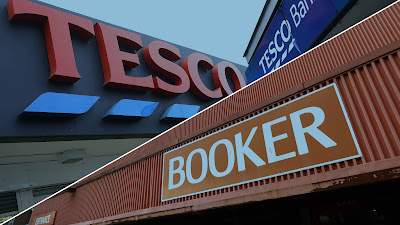
This very brief post provides a small update on a continuing story that has been covered throughout here in Financial Regulation Matters . Tesco has been in the news a lot recently, whether that be on account of aiming to move into the ‘discount supermarket’ marketplace , or on account of a massive amount of job losses as the company goes through a restructuring process, both on the shop floor and across management . However, our focus today will be on providing an update to the ongoing attempted takeover of the wholesale firm Booker. The proposed takeover of Bookers has been a protracted one, and although the deal has been given the go-ahead, slightly controversially, from competition regulators , there are still a number of hurdles to clear before the deal can be completed. Whilst the approval from the competition regulator was a major hurdle, getting everybody on side is perhaps the largest hurdle and, in that sense, the deal still has some way to go before it can cross the...

The Financial Conduct Authority comes in for Criticism: What Does PRIIPS Regulation Tell Us about the FCA’s Focus on Consumer Protection?

Image
In today’s post we will be looking at some stinging criticism that was aimed at the Financial Conduct Authority recently, specifically in relation to its regulation of Packaged Retail and Insurance-Based Investment Products, or PRIIPs. In assessing the context behind the criticism, there exists an opportunity to examine the focus of the FCA in relation to its stated mandate of aiming to ‘ make financial markets work well do that consumers get a fair deal ’. A PRIIP is essentially a packaged investment product, and it is a common investment product provided by banks within the E.U. as it offers retail investors an alternative to traditional savings accounts ; however, the determination of what constitutes a PRIIP has been intentionally left broad to allow for a range of products to be traded, but for our purposes it is enough to say that the products are publicly marketed, have exposure to underlying assets like stocks and bonds etc., provide a return over time, and have an eleme...

Politics and the Housing Problem: The Effect of Indirection

Image
In this co-authored piece, Jake Richardson helps me assess the recent increase in the adoption of the 5-year old ‘Build-to-Rent’ initiative which is being peddled as a potential solution to the Housing issues being experienced within the U.K. at present. The piece finds that one of the key outcomes of the recent moves is a demonstration that housing policy is too divided, which the piece suggests lays at the core of the issues within this particular marketplace. Earlier this year it was declared in the mainstream media that ‘ solving the housing problem is hard to deliver, hard to explain… [and] is an example of the weakness of our political system ’. This sentiment, which was used as a platform to suggest that cutting ‘stamp duty’ could be the most viable short-term fix, represents the difficulties that surround housing in the United Kingdom. In this piece the concept of the housing ‘problem’ will be used rather than the housing ‘crisis’, because even though finding solid de...