Posts

Showing posts with the label Brexit.

Is Dublin Ready and Able to Take Advantage of a ‘Hard-Brexit’?

Image
Today’s post looks at the jostling for position currently taking place within Europe in anticipation of the U.K.’s and the E.U.’s negotiations over the U.K.’s secession deteriorating into what has been termed as a ‘hard-Brexit’ i.e. an almost total separation from the Union and the benefits that come with it. We have already discussed this jostling in Financial Regulation Matters through the lens of a battle between Paris and Frankfurt , but Dublin is emerging as a very credible alternative to those aspiring financial centres. However, there are consequences that come with being the host of such vast but socially-dangerous institutions, and Ireland’s recent history means that it is important to ask whether Ireland should be making itself as open as possible to these organisations. The debate about the jostling for position between Paris and Frankfurt is well covered in the financial press. Also, another issue that has been raised in the press is that the propagation of jobs fr...

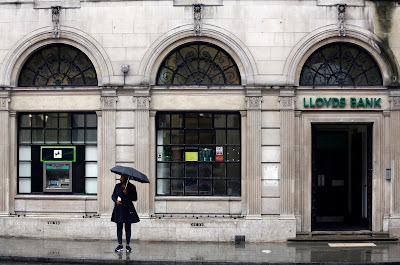
Blog Updates: Lloyds Sets up HBOS Review for Victims of Scourfield’s Fraud; A New Wave of Warnings for Executive Pay in Advance of AGM Season; and Barclays Threatens Theresa May Because of Brexit

Image
Today’s post provides for updates on posts from last month in Financial Regulation Matters , as recent news has suggested that there are particularly important developments looming. Firstly, the post will look at the developments being undertaken by Lloyds in response to the fraud undertaken by Lynden Scourfield, via Halifax Bank of Scotland (HBOS). Then, the post will provide updates on the new wave of warnings being aimed at executives in receipt of large pay packages. Lastly, the post will provide a passing comment on the recent, undeniably brash warnings given by the Chairman of Barclays to Theresa May. Lloyds’ Griggs Review On the 6 th February, the case of six financiers being jailed for almost fifty years was the target of a post in Financial Regulation Matters . The financiers, led by the head of the Corporate Division in HBOS Lynden Scourfield, conspired against the owners of small and medium sized enterprises (SME) – the scheme was to funnel the business into the...

Lloyds Bank and the PPI Scandal: The Premature ‘Out of the Woods’ Rhetoric

Image
Today’s very short post focuses upon the news that the Financial Conduct Authority (FCA) has recently extended the deadline to claim compensation for mis-sold ‘Payment Protection Insurance’ (PPI). Whilst a lot of financial institutions will have to prepare to offset the extended deadline, it is Lloyds that has grabbed the business headlines by apportioning an extra £350 million to offset any further claims that may be made of it – however, this comes only a week or two after the Bank posted its best performance figures in over a decade, as was previously discussed in Financial Regulation Matters . This post will therefore argue that the rhetoric being advanced recently regarding Lloyds – rhetoric like Lloyds represents ‘ a modern day success story ’ is wide of the mark and creates a false sense of security that we simply cannot afford to believe in. The ‘ robust recovery ’ was heralded far and wide upon the publication of Lloyds Bank’s financial performance for the previous fi...

Kraft Heinz’s Takeover Attempt of Unilever: A Sign of the Times

Image
The recent news that the massive Food Company Kraft Heinz is attempting a takeover of the British-Dutch consumer goods company Unilever has caused much debate, and for many different reasons. In this post, we will look at the particulars of the proposed deal and its potential effect. Yet, it will be important to contextualise the proposed deal against both the history of Kraft Heinz as a company, and the broader socio-economic-political environment in which this merger seeks to take place. This proposed $143 billion merger, which would create the third-largest merger ever if it were to be accepted today, has the potential to see one organisation be in the incredible position of ‘selling over 400 consumer/household goods to over a third of mankind ’, and would see it control 3% of the global market for packaged food and would, potentially, see disputes like that seen between Tesco and Unilever become a thing of the past, thus would be the significance of the power shift in the man...