Posts

Showing posts with the label Law

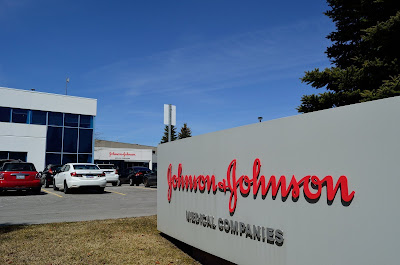
Johnson & Johnson Ceases Selling Talcum Powder in the US and Canada – Update

Image
Late last year we discussed here in Financial Regulation Matters the news that Johnson & Johnson had been ordered to pay billions of dollars in damages for the side effects that talcum powder was causing. It had been suggested at the time that the spate of litigation could end up costing the giant conglomerate more than $20 billion and, just today, the news broke that the company would cease selling the product in the US and Canada. The talc-related saga for J&J is a long one. There has been a vast number of legal actions taken against the company, with a number of claimants being awarded large amounts, with one claim leading to $417 million in damages being awarded , and in another $4.7 billion to 22 women in the US . Interestingly Forbes said recently that J&J stock may be undervalued , but that may be about to change. The Financial Times is leading the way with the reporting that the company has dropped the sale of the product in the North American market , al...
An Update on Carlos Ghosn

Image
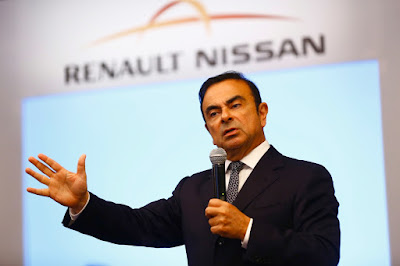
The title of this last of three posts today is a little misleading, because it would probably need a dedicated team to keep up-to-date on the case of Carlos Ghosn. In November 2018 we heard from Oluwarotimi Adeniyi-Akintola of Aston Law School how Carlos Ghosn had been accused of financial improprieties and the falsification of securities reports or, as The Independent put it, Nissan had found that he had engaged in the personal use of company money and had under-reported his income in violation of Japanese law . However, since then, the case has taken an almost soap-opera style turn and today, in front of a packed room of reporters in Lebanon, the former Chair of the Nissan Alliance put forward his case as to why he had circumvented the conditions of his House Arrest in Japan and fled to Lebanon . After being charged by Japanese authorities last year, Ghosn had posted a £6.8 million bail in April. Owing to his abilities and connections, the bail deal was structured so that he ...

Johnson & Johnson Told to Pay $8 Billion in Damages

Image
In August 2017, we looked at a case whereby Johnson & Johnson, the global pharmaceutical company, were ordered to pay more than $400 million in damages . However, this month a Jury in Philadelphia decided that the company would face a much higher financial penalty on account of its development and marketing of an anti-psychotic drug that has been linked to the development of breast tissue in men. In this post we will look at this award, what it means for J&J, and what happens next. The case has been brought by Nicholas Murray of Maryland, who has claimed that he developed female breast tissue after taking the drug Risperdal when he was younger . It has been reported that the drug has been linked to the abnormal growth of breast tissue in boys. Risperdal is used to treat a number of mental/mood disorders, including schizophrenia, bipolar disorder, and some variants of autistic disorder . The US Food and Drug Administration approved the drug for use in 1993 for these con...

The Assault on Tobacco Continues, but what does the Future Hold for the Industry?

Image
With the rise in sustainable and, to a point, ethical investing recently, there is now concerted pressure being placed upon the large tobacco companies from investors and policymakers. In today’s post we will look at this pressure and how it is building, and also in what direction the industry may move once the inevitable move from cigarettes and cigars takes place. There are suggestions that the traditional tobacco companies may move into vaping industries in a much more concerted way, but there are a number of potential issues awaiting them if they choose to do that. A British governmental report this year proudly stated that there is an ‘ ambition to go “smoke-free” in England by 2030 ’. This was accompanied by ‘an ultimatum for industry to make smoked tobacco obsolete by 2030, with smokers quitting or moving to reduced risk products like e-cigarettes’. This policy movement is being witnesses against a financial movement which is seeing the largest traditional tobacco compani...

The Case of Purdue Pharma, the Sackler Family, and the Opioid Crisis

Image
In the first of two short posts today, we will look at the case of the billionaire Sackler Family and their remarkable effect upon American society. The family, who own Purdue Pharma amongst a list of other ventures, have this week seen a massive legal action taken against them by the State of New York who argue that the company is ‘ responsible for the opioid epidemic ’ sweeping through the United States. The attorney-general for New York has called the lawsuit the ‘ nation’s most extensive ’ with respect to the pharmaceutical industry and comes right on the heels of a $270 million suit that was settled in the State of Oklahoma on exactly the same grounds. Whilst the company and the billionaire family who own it did not admit guilt (settling parties rarely do, hence why they settle outside of court) it has potentially opened the trapdoors for litigation. It comes as no surprise then that the company is reportedly considering bankruptcy proceedings in the face of such an onsl...

Auditors and the ‘Expectation Gap’

Image
We have only looked fleetingly at the story of Grant Thornton – The British-founded ‘professional services’ company that is now regarded as one of the largest firms outside of the traditional ‘Big Four’ audit firms – and its connection to Patisserie Valarie. As the chain sits currently in administration and is ‘ set to be sold off piecemeal ’, the role of Grant Thornton in auditing the chain just before it collapsed has brought the auditor firmly into the spotlight. Grant Thornton’s CEO is currently facing questions from MPs and, as part of his response, he has told the House of Commons Committee that there was an ‘expectation gap’ between what is expected of audit firms and what they do in practice. In this post, we will review the story and analyse the developments, but focus more on this concept of an ‘expectation gap’ existing in relation to the auditing industry, which is particularly centralised within the financialised society we live in. Patisserie Valerie entered in...

Renewed Calls for the Break-up of the “Big Four” Audit Firms: Another Example of “Divergence”?

Image
In today’s post, the focus will be on the so-called “Big Four” audit firms – PwC, KPMG, Deloitte, and E&Y – after details of the collapse of construction firm Carillion continue to have a significant effect. We will examine these calls to dismantle the long-standing oligopoly, but there will be a discussion about what these calls actually mean. This author has advanced the notion of a ‘divergence’ existing when it comes to regulating oligopolies (specifically in relation to the Credit Rating industry), and it will be discussed whether this is the case in this particular instance also. There will also be some reference to a forthcoming book by this author on this very topic. The calls for the dismantling of the audit oligopoly could stem from a number of instances in reality, but the current calls stem from the collapse of Carillion. We have covered this collapse here in Financial Regulation Matters since the first warning-signs were uttered, but the revelations regardin...

The Personal Debt Spiral Continues

Image
The issue of debt, and more specifically personal debt, has been a consistent focus here in Financial Regulation Matters , with the most recent post reporting on the fears that the personal debt crisis was set to deepen . Whilst we know that this crisis, and the ‘age of austerity’ go hand in hand, there are, of course, a number of competing elements that are fuelling the current debt crisis. In today’s post, the focus will be on the latest fears regarding the crisis, but also on calls by an influential Labour MP who is calling now for the credit card companies to come under increased scrutiny after successfully campaigning against payday lenders like Wonga. Rather than general debt figures being the focus this week in the media, the focus instead focuses upon credit card debt specifically. This is on the back of official figures that note that, over the last few months, the rate of credit card debt has risen to a 12-year high . The reported rise was over 8% for the last year , w...

Has the FCA “Gone Soft”, or are its Hands Tied?

Image
The Financial Conduct Authority (FCA), one of Britain’s primary financial regulators, has featured heavily within Financial Regulation Matters , for obvious reasons. However, a lot of the recent posts focusing on the regulator have been concerned with its approach to the unfolding scandal at RBS, with its role in the publication of a damning report drawing attention most recently. However, recently there have been suggestions that the regulator has ‘ gone soft ’ in its approach to the regulated, with the RBS debacle being cited as the most compelling evidence for the regulator’s approach. In this post, these accusations will be assessed against the evidence, with a larger question being asked with regards to both the role of the regulator in the larger picture, and its willingness to take action. The decision by the FCA to commission, and then refuse to release a damning report into the operations of RBS and its treatment of small and medium enterprises (SMEs), has caused outra...

Race, Gender, and Business: The Institute of Directors in the Spotlight

Image
In Financial Regulation Matters , we have looked on a few occasions at the issue of gender in relation to the world of business ( here , here , and here ) and to a lesser extent the issue of race ( here ). However, in today’s post we will be examining recent developments coming from the Institute of Directors (IoD) that bring both of these issues sharply into the limelight. After gaining a better understanding of the IoD and what its role is, the two issues will be examined to gain a better understanding of the problem facing the business arena, all for the aim of providing context to the revelations that are making the headlines at the moment. The Institute of Directors was founded in 1903 and, after just three years, was awarded a Royal Charter for the purposes of supporting, representing, and setting standards for business leaders across the country . The Royal Charter was the basis of the IoD establishing and implementing four key ‘principals’ , which include: (Better Direc...

Dining Crisis Continues: A Spotlight on the Legal Frameworks Surrounding Troubled Companies

Image
Over the past few weeks, a number of the country’s leading casual restaurants have found themselves in financial difficulties, with a number collapsing altogether. With news recently that nearly 35 of the top 100 British restaurant groups are operating at a loss , this post will look at some of the reasons why this may be and the potential effect of such a damaging phase for a sector that employs so many people in the U.K. However, on the back of that review, the question will be raised as to what legal options are available to these companies as they suffer financial difficulties, and also whether they may be effective in allowing the sector to survive the current crisis. The leading story in this particular field is that of the troubles being experienced by celebrity Chef Jamie Oliver. Oliver, and his Jamie’s Italian group have hit the headlines more than most in recent months, with stories revolving around the development that Oliver had to pump in £3 million of his own mone...

Updates – Carillion, Sir Philip Green, and Toys ‘R’ Us

Image
As is usually the case in this particular arena, business stories are continually developing and usually at a rate of knots. Therefore, today’s post catches us up with a few stories that we have looked at previously; all of these stories selected today were always going to be end up in a negative, and today’s updates confirm that with news that the Carillion collapse was not what it first seemed (predictably), that Sir Philip Green is continuing his war of words with British Politicians (and one in particular), and that the retailer Toys ‘R’ Us failed in its attempt to save itself. The Carillion Collapse Reveals Predictable Skeletons We have looked at the issue of Carillion on a number of occasions, ranging from the onset of the crisis to the collapse and subsequent call for the Pensions Regulator to much more in clawing-back some of the pension fund that was depleted by the company . Rather predictably on the back of such a large and interconnected collapse, the post-Caril...