Posts

Huarong Issues Hint at Deeper Issues for the Credit Rating Agencies and their New Chinese Adventure

Image
In today’s short post, the developing problems with Huarong – a state-backed asset manager that is one of China’s largest offshore issuers – are revealing some engrained issues within the credit rating industry that may provide insight into the future of the Big Three’s relationship with China as it continues to open its doors to the international rating agencies.   The company has missed a number of financial disclosure deadlines and, according to the Financial Times, is in the middle of a massive sell-off , which started a few weeks ago. However, it is only over the past few days that the rating agencies have begun to take action, which is leading some to declare that there are similarities between this and the agencies’ actions regarding the collapse of Lehman Brothers . Whilst some negative credit watches have been established, it is Fitch who have broken rank and downgraded the company, from A to BBB. The company itself is in disarray, with it declaring that it will miss a...

The Eurasian Economic Commission Calls for Its Own Credit Rating Agency

Image
In today’s brief post, the concept of a country or a region developing its own credit rating agency again raises its head, this time in relation to the Eurasian Economic Commission and the countries that it relates to. We have seen on multiple occasions the calls for regionalised credit rating agencies to be developed, often to no avail.   The Eurasian Economic Commission, created by Treaty between Belarus, Russia, and Kazakhstan in 2014, exists very much in the same process as the European Union, complete with its own court system (located in Minsk) and a range of policy objectives across the Member States. However, the reading of the latest announcement from the Minister for Integration and Macroeconomics – Sergei Glazyev – reveals the centrality of Russia and its interests. He states that ‘ I believe that the creation of a rating agency in the EAEU is a very important issue. As long as we use the ratings of America’s Big Three credit rating agencies, we will automatically f...

The SEC is Pushed to take a Stronger Approach to Credit Rating Reporting

Image
On March 11 th , the Investor Advisory Committee within the SEC discussed the issue of reporting problems within the SEC’s reporting framework for credit rating agencies. The discussion – found here in the SEC’s webcast archive – was based on the analysis of the Market Structure Subcommittee (list of sub-committee members found here ) and the proposal regarding how the SEC should mandate the annual reporting of credit rating agencies and how they are assessed by the Commission.   Essentially, the issue relates to the annual report that the SEC must develop as part of wider regulations. This report must detail any rule infractions that SEC Examiners found, alongside a number of other elements (like the market share and concentration within the industry etc.) This process is replicated in the E.U. via ESMA, and in the U.S. this is conducted through the post-Dodd Frank developed ‘Office for Credit Ratings’ (OCR). The sub-Committee’s Chair, J.W. Verret, explained in the webcast (s...

China’s Continued Reform Posturing Against Domestic CRAs Continues to Miss the Point (or Does It?)

Image
China’s response to the issues within its domestic marketplace recently has been well covered here in Financial Regulation Matters (like here and here ) so I will not go into the background too much in this short post. However, the most recent posturing from the collected regulatory framework in the country reveals, in perhaps its most obvious form, why a regulatory framework (and not just China’s) is only even a robust façade on top of underlying and societally fundamental truths.   What do I mean by this last sentence? Well, let us start by considering the recent statements made by five of the country’s top financial regulatory bodies. The five bodies – the central bank, the finance ministry, the national economic planner, the securities regulator, and the banking and insurance regulator – have all teamed up to declare that the new regulatory approach will be to shift the burden onto the domestic agencies with the aim being to ‘ guide them to see reputation as the basis of...

Study Reveals More Evidence of a “One Rule for One, One Rule for Another” Approach to Credit Ratings

Image
Our friends at CountryRisk , via their Chief Economist Moritz Kraemer , have recently published a study that examines the rating actions of the leading credit rating agencies since the onset of the COVID-19 pandemic. Perhaps unsurprisingly, the results show a marked bias towards the developed world and against the developing world.   The issue of the rating agencies reacting more harshly to the world’s poorest countries has been examined on a number of occasions in the credit rating literature (see here , here , and here ) so it comes as no surprise to hear that the existence of this bias during the COVID-19 crisis is of interest to onlookers, and it is indeed very welcomed. The study, which can be found here , and was picked up by Reuters and dissected here . It aimed to compare how the Big Three rating agencies (S&P, Moody’s, and Fitch) have reacted to the crisis and how their decisions have played out in relation to the world’s poorest and richest countries. It finds tha...

The Securities Association of China Piles Even More Pressure on Chinese CRAs

Image
As an update to the last post here in Financial Regulation Matters that examined the pressure being piled onto the Chinese rating agencies by the state apparatus, today’s short post looks at further pressure coming from the ‘private’ sector within the Country.   Yesterday, the Securities Association of China (website available here in Chinese and here in English) – a private, non-profit organisation that was formed in 1991 and is under the ‘direction’ of the China Securities Regulatory Commission (CSRC) – produced its quarterly report and the content was damning for the domestic credit rating agencies. We have already discussed how the State is turning on the domestic industry in reaction to the widespread issues facing issuers in the country, with a number of high-profile defaults hitting the headlines. The report discusses the apparent deficiencies within the agencies , ranging from ‘insufficient disclosure’ to ‘weak inspection’ mechanisms, which it argues negatively affe...

China Turns the Screw on Domestic Credit Rating Agencies

Image
We saw at the end of 2020 that Chinese credit rating agencies were coming in for unprecedented criticism in the light of a number of high-profile corporate defaults. With the entrance of the international credit rating agencies into the Chinese marketplace, the pressure was already ramped up against the domestic players. However, as the corporate bond arena within China continues to suffer, now the dominant Chinese regulator is taking its turn in, potentially, disembowelling the domestic rating space.   On Friday, the China Securities Regulation Commission (CSRC) published some revised rules concerning the registration of corporate bonds. The original rules stated that those wanting to issue bonds for investment had to demonstrate the riskiness of those bonds by gaining a credit rating from a domestic supplier. Now however, the CSRC has done away with this requirement, instead stating that, as part of the registration requirements, there would now be minimal thresholds that a c...

The SEC Charges Morningstar for Violating Securities Law Relating to CMBS Ratings

Image
News broke late yesterday that the US Securities and Exchange Commission was suing Morningstar for its ratings of commercial mortgage-backed securities that were issued from 2015 to 2016.   Reuters reports that ‘ Morningstar’s credit ratings business allegedly violated disclosure and internal controls requirements in 30 commercial mortgage-backed securities transactions from 2015 to 2016 when the agency allowed analysts to make undisclosed adjustments to key stresses in its modelling, the SEC said ’. Morningstar, who now issue ratings via their subsidiary DBRS Morningstar after their acquisition of DBRS in 2019, responded that they had complied with all regulatory requirements. However, the SEC alleges that Morningstar allowed its analysts to ‘frequently’ alter their ratings, with those changes being undisclosed and out of alignment with their published methodologies. The result of this was that issuers were subsequently able to lower their interest payments to investors withou...

IOSCO Publishes Report on the Effect of Covid Economic Support on Credit Ratings

Image
The Board of the International Organisation of Securities Commissions (IOSCO) recently published a report regarding the effect on the credit ratings of the Big Three credit rating agencies (S&P, Moody’s, and Fitch) of the use of ‘Government Support Measures’ (GSM) relating to the Covid-19 pandemic. Interestingly, IOSCO combed public information and also liaised with the credit rating agencies themselves to study the methodological changes, and also the real effect changes to the ratings produced since the onset of the pandemic. The result is not really surprising, but there is a clear warning from the credit rating agencies, via IOSCO and this report, that the withdrawal of GSM across the board needs to be very gradual indeed.   The report, available here , contains the review of ratings from the Big Three in a variety of categories, ranging from structured finance ratings to sovereign ratings. IOSCO start by stating that ‘the analysis includes a review of any changes made ...

Moody’s Purchases Cortera

Image
In today’s very brief post, information on Moody’s’ latest acquisition is introduced although, at the time of writing, not much information is available regarding the specifics of the deal – it is unlikely to be a costly acquisition, but it further boosts the agency’s offerings on small business-related information.   Moody’s, via its Moody’s Analytics arm, partnered with Cortera in 2018. Cortera, a company which analyses small business mainly (under 500 employees), has built one the world’s largest databases on such entities . In 2018, Moody’s Analytics partnered with the firm to accentuate their ‘small business lending solution ’. At the time, the founder of Cortera – Jim Swift – noted that a ‘ lender’s ability to assess the credit risk of small private companies can be challenging with traditional sources… incorporating our trade credit data will enhance the Moody’s Analytics solution by offering its clients a wealth of insight into these businesses ’. The service, which rem...

ESMA Spell Out Their Regulatory Vision for ESG Rating Agencies

Image
As we discussed in a previous post , the calls for the regulation of the ESG ratings sector, particularly in the EU, are growing louder by the day. ESMA have recently responded to the European Commission regarding this point – see here – via its response to public consultation regarding the Renewed Sustainable Finance Strategy, but it has now attempted to provide further detail. In a letter addressed to the EC at the end of January, ESMA provide more detail on its regulatory vision for the sector, and the obstacles that exist.   ESMA starts by noting that there will be difficulties in moving towards a more formal regulatory framework surrounding the ESG Rating Agencies. That the ratings and the ‘agencies’ themselves are complex in nature does not help. Also, as the industry attempts to innovate to meet the ever-growing need for its services, this has also been identified by ESMA as being problematic. They even note that ‘estimating the number of firms in the market for ESG rat...

Are Some Credit Rating Analysts Guilty of ‘Informed Trading’?

Image
Earlier this month, research was published which spectacularly suggests that some analysts of the Big Three rating agencies are guilty of ‘informed trading’, which in this context means leaking information to institutional investors ahead of the publication of rating actions by their respective credit rating agencies. In this post, we will look at this researched claims and assess the potential impact such findings may have upon the industry, if any.   Dr Omri Even-Tov of Berkeley Haas Business School and Dr Naim Bugra Ozel , Visiting Associate Professor at Wharton Business School have co-authored an article that can be read here . The article, entitled What moves stock prices around credit rating changes? seeks to extend the studies that have found that credit rating changes lead to significant stock price reactions by examining whether informed trading may affect the stock price before the rating announcement. One of the key elements that the researchers look for is wheth...

MIT Launch “The Aggregate Confusion Project” to Work on ESG Rating Problems

Image
In March 2020, when discussing concerns that had been raised regarding the ESG Ratings arena , we saw how an article developed by Professor Roberto Rigobon, Dr Florian Berg, and Dr Julian Kölbel argued that there are inherent divergences witnessed between the ratings within the ESG rating arena, and provided for a number of reasons as to why. Recently, via MIT and the MIT Sloan Sustainability Initiative, the team are launching the Aggregate Confusion Project to tackle those issues.   The paper, published in August 2019, is entitled ‘ Aggregate Confusion: The Divergence of ESG Ratings ’ and is certainly worth reading. Its findings are particularly important, particularly in relation to the effects of measurement divergence in a range of contexts. Without spoiling the paper for those that have not read it yet, the key to the paper is understanding and demonstrating the ‘rater effect’ and how that is currently impacting upon the stunted development of the industry. More worryingly, ...

European Joint “Board of Appeal” (BoA) Rules Against Scope Ratings

Image
The European Joint Board of Appeal (BoA) of the European Supervisory Authorities – the European Banking Authority, European Insurance and Occupational Pensions Authority, and the European Securities and Markets Authority – were recently asked to decide on an appeal from Scope Ratings regarding their recent penalty from ESMA – see here for the blog post on the penalty.   Yesterday, the decision was made and publicised . Scope had appealed upon the belief that the decision by ESMA to penalise them was not ‘well founded in law’. ESMA had contested that Scope had negligently applied its methodologies to a number of rating actions, whilst also failing to revise and update their methodologies accordingly, and summarily fined the agency €640,000. Specifically, Scope argued that Article 8(3) of the ‘CRA Regulation’ (EU/462/2013) had not been breached as ESMA had contested because the section of the regulation only concerns the design of the methodology, not the application. Furthermor...

Calls for ESG Rating Agency Regulation Grows Louder in Europe, But Could It Actually Save the Industry?

Image
The ESG Rating Agencies, or Corporate Sustainability Systems as they have also been labelled as to convey the differing elements of the industry, are becoming ever more important in theory. This is because, as Refinitiv found recently, 98% of global institutional investors are now actively considering ESG in their investment decisions. However, there are massive issues within the industry and its multitude of models, which has now led the Autoriteit Financiële Markten (AFM) and Autorité des marchés financiers (AMF) to issue a joint paper calling for regulation at the European Level. However, what would a new regulatory framework look like, what could it achieve, and what effect would it have on the development of this relatively nascent industry?   Whilst the EU have started a study on the ESG rating marketplace and its intricacies, as of yet the market is essentially unregulated. The market they exist to serve is exploding and growing at an incredible rate but, ju...

Chinese Credit Rating Agencies in the Firing Line

Image
We have reviewed the credit rating situation in China extensively here in Financial Regulation Matters (see here ) and it is well known that the Chinese rating agencies are under massive pressure, both from the Chinese State and also the opening up of the domestic marketplace to the international credit rating agencies for the first time. However, the underlying political dynamics within the Chinese marketplace means that the credit rating agencies within the country are between a rock and a hard place and, yesterday, one of the Chinese credit rating agencies found themselves being thrown between the two.   The Chinese domestic marketplace is in a precarious position at the moment, as a number of defaults rock the confidence in domestic corporate debt market. Whilst this is a trend across the world of course, there have been a number of high profile defaults recently within a relatively short space of time. What increases the pressure is that a number of ‘State-Owned Enterpr...

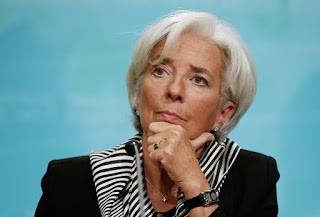
Lagarde Seeks to Assert the ECB’s Dominance – and it could affect the sustainable/credit rating market

Image
Today’s post reacts to comments recently from Christine Lagarde, relating specifically to the role and neutrality of the European Central Bank and its position with regards to advancing European policies. We have discussed, on a number of occasions recently, the perilous position of the sustainable rating environment and, as I suggest, the potential importance of European sustainable-related developments to the health of that particular industry. In that regard, the recent comments on the role of the ECB in potentially enforcing the EU’s climate-related policies not only marks a controversial turn in sentiment, but potentially impacts the development of the sustainable rating marketplace.   Lagarde spoke recently and in emphasising her unhappiness with the development of sustainability in the marketplace, declared that ‘ climate risks are not adequately priced ’. The article in Bloomberg’s Quint offering suggests that she may lead the ECB in a new direction, with the decisions...